A practical checklist for routed liquid-cooling assemblies.
Choose the routing form
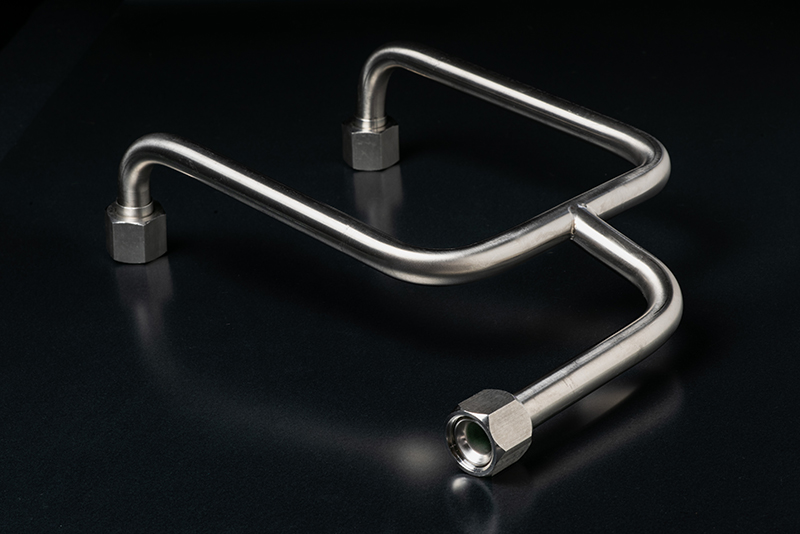
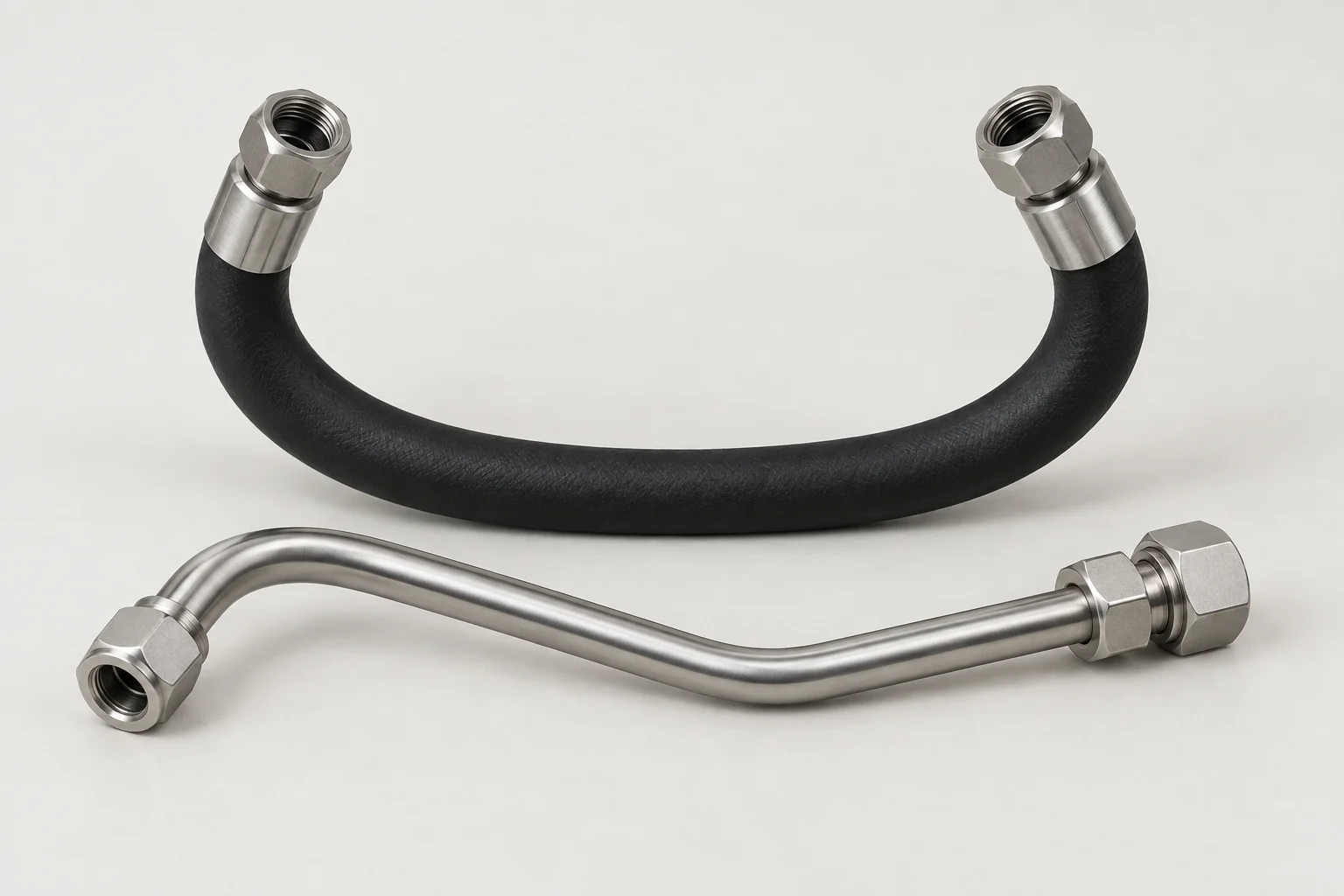
A hose suits routes requiring flexibility and service movement; a formed tube requires controlled bends, datums and end geometry. The choice depends on space, connection loads, maintenance and assembly repeatability.
Record both ends
Supply a drawing or route sketch with finished length, end connections, angular orientation, bend constraints and mounting or clamp points. For tube, include OD, wall, bend radii, end form and dimensional tolerances. For hose, include construction, ID, OD envelope and termination method.
Agree on assembly acceptance
Give coolant, operating and peak conditions, cleanliness and capping, leak or pressure-test method, identification, packaging and quantity. A hose-body rating is not automatically the assembled hose rating.
RFQ checklist
- Routing envelope and minimum bend constraints
- End geometry and orientation
- Wetted materials and coolant
- Pressure, leakage, cleanliness, packaging, and quantity
Evidence boundary
Confirm every Product value and test condition for the exact configuration. This guide does not establish availability, qualification or system performance.
Related component references
Local editorial preview
Related component references
Manufacturer examples retain their model and conditions. These references describe source products, not approved stock or supply. Images are pending final selection and rights review.
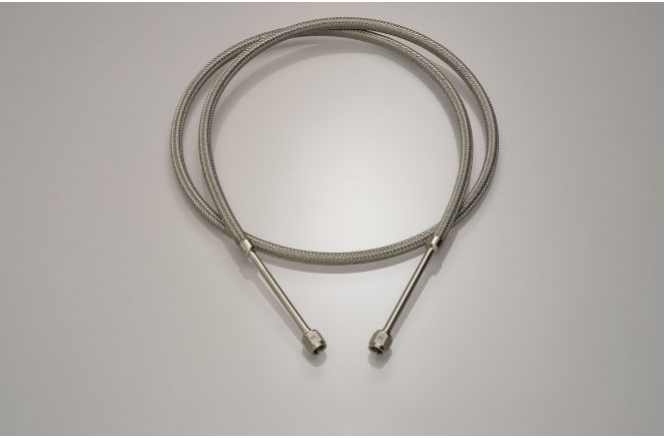
Hose Assemblies
68 documented parameter entries. Open the family to review model scope, options and conditions.
Tube Assemblies
17 documented parameter entries. Open the family to review model scope, options and conditions.